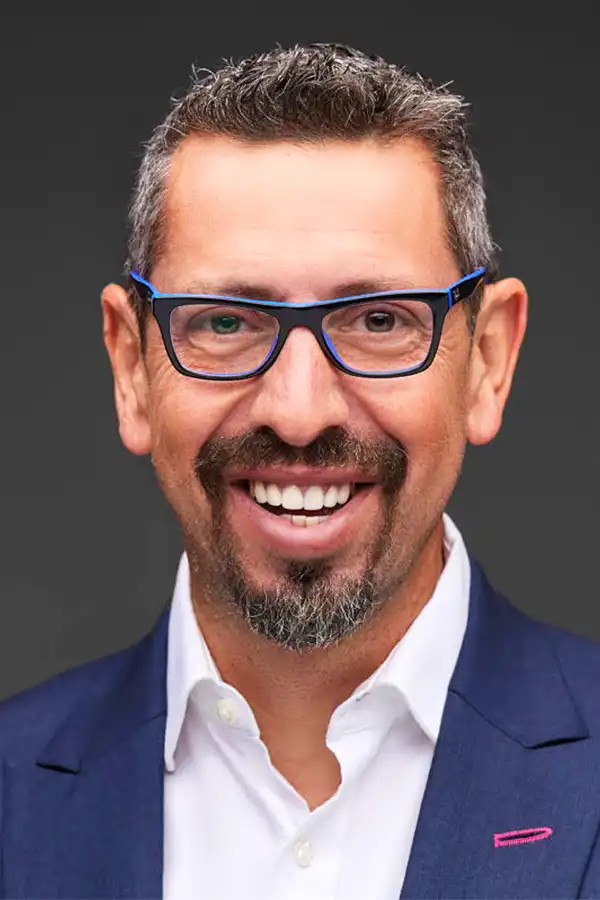
On a rooftop in Spring Studios, New York I sat chatting to Lisa Bodell, futurist, entrepreneur, and the Founder and CEO of FutureThink. Lisa and I have remained friends and thought partners, and she recently recorded an episode with me for my podcast ‘The Leadership Enigma.’ During my conversations with Lisa, she told me she was picking up on something many HR and L&D leaders can feel but struggle to name: leadership has become untenable.
Not because leaders don’t care. Not because employees don’t want meaningful work. But because the “deal” between organizations and people has quietly expanded into something no single manager can realistically hold.
As Lisa put it, work is no longer just about “financial stability.” It’s become “your wellness, your identity, your personal fulfilment, your community.” And while those things matter, “that’s way too much expectation to put on a leader.”
For Chief People Officers and Chief Learning Officers, this is the heart of the issue: we’ve built systems that ask leaders to be everything, then punish them when they can’t.
Executive Takeaways
Lisa Bodell says leadership now carries too many expectations.
Culture expanded, but accountability did not keep pace.
Leaders should build capability, not comfort.
Lisa recommends a clearer Work Accountability Contract.
Engagement surveys often measure sentiment, not system health.
The pendulum problem: Culture rose, accountability didn’t
Lisa describes to me a slow-burn shift that started well before the pandemic. In the late 80s, there was a clearer contract: salary in exchange for loyalty and performance. Then came big-tech’s perks war—think Google, Netflix, and Amazon—followed by COVID’s spotlight on flexibility and then shifting social norms that elevated work-life balance and personal meaning.
None of that is inherently bad. The problem is what got left behind.
“Everything was about culture, culture, culture,” Lisa said, “and it wasn’t about accountability. Accountability didn’t keep up with that.”
That gap is where many leadership teams now live, high expectations for empathy and accommodation, without equal clarity on contribution, boundaries, or shared responsibility.
Leaders aren’t meant to be parents
One of the strongest moments in my conversation was the playing field analogy. Employees want great coaches, great kit, a winning plan—and to start every game. But as Lisa noted, “the players have to play a role too.”
That’s where modern leadership often breaks down. Leaders feel responsible for “watering every plant and calling it growth,” when the job is different:
“Their job is to not make people comfortable. It’s to make them capable.”
In HR terms, this isn’t anti-people. It’s pro-development. Comfort creates short-term harmony. Capability builds long-term confidence, performance, and mobility—especially in volatile environments.
And Lisa drew a crucial line for CPOs and CLOs: if leaders can’t push kindly and clearly, they stop being leaders and become parents. That’s a fast track to burnout, resentment, and “leadership performance theatre” rather than leadership performance.
The solution isn’t harsher leadership. It’s clearer contracting.
Lisa’s most actionable idea is the Work Accountability Contract (she also framed it as a work commitment agreement). The power is in its simplicity:
Here’s what the organization will provide (not just pay and benefits, but decision rights, clarity, psychological safety, tools, flexibility, personal growth).
Here’s what the employee will provide (outcomes, standards, responsiveness, collaboration, continuous improvement).
Here are the boundaries (flexibility isn’t endless; client needs and team delivery still matter).
We agree verbally, person to person—moving “from paperwork to promise.”
She used a memorable comparison: the airline exit row. They require verbal confirmation because it signals “skin in the game.” The same psychology applies here: spoken commitment creates ownership. The yearly end of year review is simply a ‘rear view mirror’ conversation with little meaning or application.
For CLOs, this is a learning design gift: it turns vague performance management into an ongoing capability conversation. For CPOs, it reduces risk by replacing ambiguity (where most conflict lives) with clarity (where trust can thrive).
Fix the measurement: Engagement is sentiment, not the system
Lisa’s critique of employee engagement surveys landed because it explains why many leaders feel trapped.
“Employee engagement surveys measure sentiment,” she said. “They don’t measure the system.” In practice, they’ve become “performance reviews for leaders,” where anything negative is automatically framed as the manager’s failure—without balancing contribution, shared problem-solving, or employee agency.
Her “Rate My Professor” analogy is the warning: popularity metrics encourage safety and mediocrity, not growth and excellence.
The reframe for People and Learning leaders is this: keep sentiment—but add participation and system health. Ask not only “How do you feel?” but also:
Did you have clarity on priorities and success measures?
Did you remove barriers or escalate them early?
Did the team uphold working agreements (responsiveness, deadlines, decision rights)?
What “stupid rules” should be challenged or removed?
The 3Cs: A practical operating system reset
Lisa offered a clean framework CLOs/CPOs can deploy quickly:
Clarity: explicit expectations and two-way commitments (the contract)
Challenge: permission to question and remove unnecessary complexity (“kill stupid rules”)
Calibrate: rebalance feedback loops so leaders and teams evaluate the system together
The point isn’t to swing back to command-and-control. It’s to return to centre: “support with standards” and “flexibility with accountability.”
What CLOs and CPOs can do next (starting Monday)
Pilot a Work Accountability Contract with 2–3 leadership teams for 90 days. Make it short (one page), verbal-first, and revisited quarterly.
Rebuild engagement into a balanced scorecard: sentiment + contribution + system friction. Keep the human lens, add shared ownership.
Train leaders in “direct + kind” conversations as a core capability, not a nice-to-have. Normalize the line Lisa used: “Being clear is not being cruel.”
Create a “challenge channel” (rituals, forums, office hours) where teams can surface blockers and simplify work—then actually remove the blockers.
Learning objectives for the reader
By applying these ideas, CLOs and CPOs can help leaders and teams:
Re-establish a fair two-way contract that reduces ambiguity and increases accountability.
Shift from comfort-first management to capability-building leadership without losing empathy.
Measure what matters: not only how people feel, but how the system performs and how everyone contributes to improving it.
If you want a rallying cry to socialize internally, Lisa handed you one that’s sticky enough to travel:
“Your job as a leader is not to make people comfortable—it’s to make them capable.”
Adam Pacifico is the host of the globally ranked, award winning podcast The Leadership Enigma, author and Partner at Heidrick & Struggles.
We use cookies to improve your experience. At MPG, we value connection—and that includes how we connect online. Cookies help us personalize your experience, improve performance, and bring you content that actually matters. Click “Accept All” to continue or view our Cookie Policy to manage settings.