
How to Choose a Futurist Speaker, Plus 12 We Recommend
What to look for, which futurist fits which event and what each one charges.
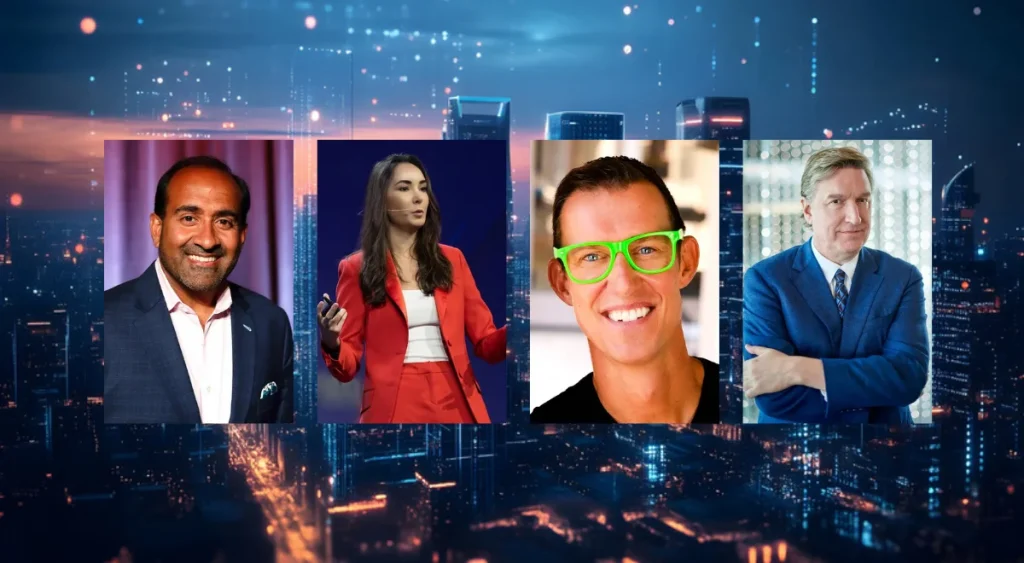
“Will a futurist give us anything we can use before next year?” Planners ask some version of that question before they book one. It is a fair worry, because a talk about 2040 can feel thrilling in the room and useless by Monday.
The futurists worth booking tie long-range change to choices your audience faces now. This guide groups 12 of them into three areas: technology and AI, consumer trends and the future of work. Each entry notes where the speaker is based and what an in-person keynote costs.
Five questions to settle before booking a futurist
Make these five decisions first. They turn a long list of futurists into a short list that fits your room.
- Pick the time horizon. Some futurists speak to the next two or three years; others look out to 2030 and beyond. Match the horizon to the decisions your audience makes.
- Decide on the lens. Technology futurists start from what is being built. Trend researchers start from what customers want, and future-of-work experts from what changes for people.
- Ask how forecasts become actions. A good futurist leaves the room with next steps. Look for programs that end in decisions, a framework or a hands-on session.
- Check for industry tailoring. Several speakers here customize for each audience. Share your sector and its pressures when you check availability.
- Agree on money and delivery up front. Speakers in this guide start between $15,000 and $50,000 for an in-person appearance. Flag any virtual need in your availability request so your agent can quote it.
Futurists who have built the technology they forecast
These four have filed patents, launched labs or co-founded tech ventures. Book from this group when your audience wants a forecast grounded in hands-on work with AI and emerging tech.
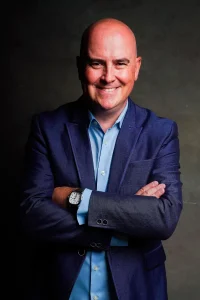
Steve Brown: AI futures for strategy teams
Steve Brown spent years as Chief Evangelist and Futurist at Intel and has served as a BCG Luminary. With more than 25 years at the forefront of AI, he has co-founded multiple AI ventures and delivered hundreds of keynotes across five continents. CNN, the BBC and Bloomberg have featured his views.
His program “AI Now and Next: Getting Ready for the Future of AI” cuts through the hype to show where the technology is heading. He also wrote The Innovation Ultimatum, on six strategic technologies he expects to reshape every business in the 2020s.
Best for: Leadership meetings and technology conferences that want a clear near-term view of AI from someone who has worked inside the industry. Steve Brown’s speaking fee: $30K–$40K in person. Travels from: Portland, OR. View Steve Brown’s profile and check availability.
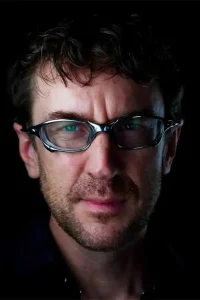
Pablos Holman: inventing with a hacker’s mindset
Blue Origin counted Pablos Holman among the original minds building its spaceships, and at Nathan Myhrvold’s lab in Seattle he led 150 scientists and engineers. An inventor with more than 70 patents, he wrote the bestseller Deep Future, and his TED talks, speeches and interviews have drawn more than 35 million views.
In “Innovate or Die Trying,” he takes audiences inside the mindset of highly inventive people and offers a look at technologies few have seen. He customizes every talk to the audience’s themes and industry, with topics such as Industry 4.0, cyber security and 3D printing. Today he leads Deep Future Investments.
Best for: Engineering, manufacturing and innovation audiences who want to hear from a builder. He also has a talk on technology in health care. Pablos Holman’s speaking fee: $30K–$40K in person. Travels from: Seattle, WA. View Pablos Holman’s profile and check availability.
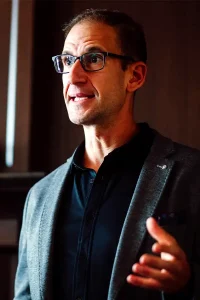
Ramy Nassar: AI foresight without the hype
As Head of Innovation at Mattel, Ramy Nassar launched the company’s first Innovation Lab and contributed to the tech strategy for the $1.5 billion Barbie film. Over 25 years he has worked with more than 250 organizations, including Apple, Verizon, Disney and the Government of Canada. He also teaches at universities in Canada and Europe.
His keynote “AI Now, Next, Never” asks leaders what matters today, what is coming and which guardrails they need. “Exponential Futures: Quantum, Blockchain, and The World After AI” maps when to experiment, when to scale and when to wait. He wrote The AI Product Design Handbook.
Best for: Executive teams setting AI strategy on a moderate budget, plus Canadian events, since he is fluent in English, French and German. Ramy Nassar’s speaking fee: $17.5K–$25K in person. Travels from: Canada. View Ramy Nassar’s profile and check availability.

Samantha Radocchia: anthropology meets emerging tech
Forbes named Samantha Radocchia to its 30 Under 30 list for Enterprise Technology in 2017. She co-founded Chronicled, a blockchain company for global supply chains, and is noted as inventing the protocols that led to ERC-721, the standard behind NFTs. The United Nations, the Federal Reserve Bank and IBM are among the groups she has advised.
Trained in anthropology and engineering, she calls herself an “archaeologist of the future.” In “Radical Next: The Operating System for the Future,” she argues that what comes next is radically different, and “Thriving in Times of Radical Change” shows organizations how to harness the chaos.
Best for: Innovation summits and tech-curious audiences who want emerging technology made approachable rather than intimidating. She also wrote the bestseller <em>Bitcoin Pizza</em>. Samantha Radocchia’s speaking fee: $28K–$38K in person. View Samantha Radocchia’s profile and check availability.
Trend hunters who read consumers and markets
This group spots shifts in what customers want and how companies compete. Pick one when your audience needs to turn trends into products, campaigns or strategy.
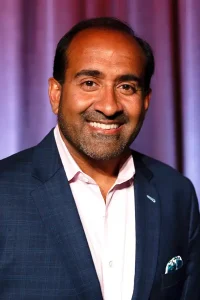
Rohit Bhargava: non-obvious trends and thinking
Rohit Bhargava is a three-time Wall Street Journal bestselling author of eight books on marketing, trends and building a more inclusive world. He left his role at Ogilvy in 2014 and has since keynoted in 32 countries. His books include Non-Obvious Megatrends and The Future Normal.
Trend curation is his method. “7 Non-Obvious Trends Shaping the Future Normal” surveys the technology reshaping daily life, while “How To Be A Non-Obvious Thinker” teaches anyone to anticipate what is coming next. Clients have included NASA, Microsoft and Coca-Cola.
Best for: Annual conferences and innovation meetings that want trends people can act on. He also facilitates, so he suits a working session beyond the keynote. Rohit Bhargava’s speaking fee: $40K–$45K in person. Travels from: Washington, DC. View Rohit Bhargava’s profile and check availability.

Henry Coutinho-Mason: consumer trends into innovation
A decade as managing director of TrendWatching put Henry Coutinho-Mason at the center of consumer trend research. He wrote Trend-Driven Innovation and The Future Normal, and as co-founder of 3Space he won the European section of the FT/Citi Urban Ingenuity Awards. He is also a guest lecturer at HEC Business School in Paris.
In “Trend Driven Innovation,” he shows how cross-industry insights reveal emerging customer needs, so teams become trend doers, not just trendspotters. “VisuAIse Futures” is an interactive, AI-powered creative session. He has given more than 100 keynotes and workshops in over 30 countries.
Best for: Product, brand and customer-experience teams that want a session they take part in. A natural fit for European events. Henry Coutinho-Mason’s speaking fee: $35K–$40K in person. Travels from: London, United Kingdom. View Henry Coutinho-Mason’s profile and check availability.

Nikolas Badminton: long-range scenarios to 2030
Nikolas Badminton is Chief Futurist and Hope Engineer of the Futurist Think Tank and was a key advisor to the Age of A.I. series with Robert Downey Jr. His book Facing Our Futures was a Next Gen Pick on JP Morgan’s 2023 Summer Reading List, and his research has appeared in the BBC, The Atlantic and Fast Company.
After more than 30 years advising company leaders, he asks audiences to question how they work today. “Facing Our Futures: Looking to 2030 and Beyond” explores the opportunities ahead, and “Energy Transitions” looks at renewable energy futures. “The A.I. Leader” covers how AI is reshaping industries and productivity.
Best for: Strategy offsites planning five or more years out, plus energy, utilities or infrastructure audiences. Nikolas Badminton’s speaking fee: $30K–$35K in person. Travels from: Toronto, ON, Canada. View Nikolas Badminton’s profile and check availability.

Erik Qualman: digital disruption and AI adoption
Northwestern University’s professor of Digital Leadership, Erik Qualman is a former sitting professor at MIT and Harvard’s edX labs. He has received an honorary doctorate for his work and is a five-time bestselling author who has performed in over 55 countries.
“Innovation by Design: Being The Disruptor vs The Disrupted” connects societal shifts to how companies stay ahead. In “Artificial Intelligence: Transforming Your Future… Today,” he argues that the real choice is how well an organization transforms with AI, not whether it does. A third program holds that digital leaders are made, not born.
Best for: Association meetings and company conferences that want digital change explained with energy. He also offers a virtual option. Erik Qualman’s speaking fee: $50K–$55K in person; $20K–$25K virtual. Travels from: Austin, TX. View Erik Qualman’s profile and check availability.
Futurists focused on people and the future of work
These four look at what changes for employees, managers and teams. They suit HR conferences, leadership meetings and any audience worried about where their jobs are headed.

Byron Reese: an optimist on work and AI
Byron Reese is CEO of scissortail.ai and has spent more than 25 years building tech companies, including ventures that led to two NASDAQ IPOs. He holds numerous patents and wrote The Fourth Age, about smart robots, conscious computers and the future of humanity.
Known for an optimistic view of work and society, he speaks on “Automation, AI, and the Future of Work” through a practical, human lens. “The Fourth Age and the Next Seven Years” covers the choices ahead, and a third talk on innovating amid rapid change suits business and education audiences.
Best for: All-hands meetings and education events where worry about automation runs high and the room needs a hopeful, grounded view. Byron Reese’s speaking fee: $30K–$35K in person. Travels from: Austin, TX. View Byron Reese’s profile and check availability.

Eric Termuende: leading the new world of work
American Express named Eric Termuende one of the world’s Top 100 Emerging Innovators. He co-founded NoW of Work, a boutique firm helping pioneer change in the workplace, wrote Rethink Work and has worked with companies such as Amazon, IBM and John Deere.
Research drives his programs, and Forbes, Fast Company and Inc. have featured his work. “Blueprint to the Future: Leading in a New World of Work” sets out his leadership blueprint, while “Generation All” covers building and leading multigenerational teams. “Leadership and AI” shows how to build resilient, trusting teams as AI enters the workplace.
Best for: HR and talent conferences and manager meetings focused on retention and teams that span several generations. Eric Termuende’s speaking fee: $30K–$35K in person. Travels from: Vancouver, Canada. View Eric Termuende’s profile and check availability.

Michael Rogers: AI scenarios for each profession
For ten years Michael Rogers was vice president of The Washington Post Company’s new media division, and he later served as futurist-in-residence for The New York Times. He received the World Technology Network Award for Lifetime Achievement in Media and Journalism and wrote Email from the Future: Notes from 2084.
“AI and Work: Rough Waters Ahead” builds a realistic scenario of the workforce challenges your profession or business will face. He also tailors talks to specific fields, such as “AI Goes to School” for educators and “AI and Healthcare: A Promising Prescription.” Past audiences include Boeing, Pfizer and NASA.
Best for: Professional associations and education or healthcare meetings that want AI framed for their field. He has the lowest starting fee on this list. Michael Rogers’s speaking fee: $15K–$20K in person. View Michael Rogers’s profile and check availability.
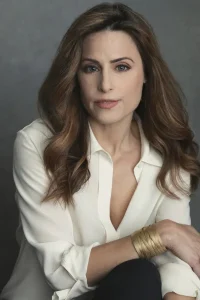
Abigail Posner: human creativity alongside AI
Trained in social anthropology at Harvard, Abigail Posner pioneered Humanizing Digital, an anthropology-based look at our emotional relationship with technology. She spent 13 years at Google, founded the Human Code Company and has been featured in The New York Times, Forbes and CNBC.
Her programs put people first. Her AI keynote treats the technology as a force multiplier for human creativity and sharper problem-solving. “Wired to Create” shows every person in the room how to use the creative capacity they already have.
Best for: Creative and innovation teams and companies rolling out AI that want staff to see where their own judgment still counts. A virtual fee is listed too. Abigail Posner’s speaking fee: $25K–$35K in person; $25K–$30K virtual. Travels from: New York, NY. View Abigail Posner’s profile and check availability.
Think of these 12 as a shortlist to start from. Our page of every futurist we represent gives fees and where each one is based.
Where futurist fees start
Futurists on our roster start at about $15,000 and reach $85,000 for an in-person appearance, and half begin at $30,000 or less.
- Under $25,000: Michael Rogers and Ramy Nassar start here, which puts them within reach of associations and smaller meetings.
- $25,000 to $39,999: the crowded middle, where Abigail Posner, Byron Reese and Henry Coutinho-Mason all begin.
- $40,000 to $59,999: Rohit Bhargava and Erik Qualman both open in this range.
Expect the quote to shift with your date, venue, program length and delivery mode, with travel normally extra for in-person events.
Fees from the Mollie Plotkin Group speaker database as of October 21, 2026.
Pairing a futurist with your event
- Executive or board offsite: Steve Brown or Ramy Nassar can frame AI choices for the people who set strategy.
- Industry association meeting: Michael Rogers adapts his AI scenarios to specific professions, from education to healthcare.
- Marketing or brand conference: Rohit Bhargava, Henry Coutinho-Mason and Erik Qualman turn consumer and digital shifts into ideas teams can use.
- Engineering or manufacturing event: Pablos Holman speaks as an inventor, with patents and hardware projects behind him.
- HR or talent summit: Eric Termuende focuses on leading teams and attracting talent as work changes.
- Company-wide meeting with automation worries: Byron Reese brings an optimistic, practical take on AI and jobs.
- Long-range planning session: Nikolas Badminton looks to 2030 and beyond, including energy futures.
- Creative or innovation gathering: Abigail Posner or Samantha Radocchia show how people and new technology can work together.
What we looked for in a futurist
From our futurist roster, we kept the ones with a published fee and real work behind their forecasts, such as companies founded, research published or products built. We grouped them by the lens they use rather than ranking them, since the right futurist depends on what your audience needs to decide.
Futurist questions from event planners
What do futurist speakers charge?
Most futurist speakers fall between $25,000 and $40,000 to appear in person. Across the field, fees start near $15,000 and top out around $85,000. Where a speaker lands depends on profile and demand. Your quote will also shift with timing, venue, delivery mode and how much custom research you request, and in-person travel is normally billed separately.
What does a futurist keynote usually cover?
Most futurist keynotes map a handful of forces, such as AI, shifting customer behavior or changes in how people work, and then show what they mean for your audience. The best ones end with practical steps rather than predictions alone. Tell your agent which forces matter most to your industry so they can shortlist speakers who lead with them.
How do I pick a futurist for a specific event?
Start with the decision your audience faces. A board weighing investments needs a different futurist than a sales team or an HR conference. Then choose the lens: technology, consumer trends or the future of work. Send your audience profile, industry and goals with your availability request, and an MPG agent will propose two or three strong fits.
Will a futurist adapt the content for our sector?
In most cases. Many futurists swap in scenarios from your field, and Michael Rogers, for one, builds talks around a specific profession. Brief your agent on your industry, the people in the room and the pressures they face. Much of the tailoring takes shape on a prep call before the event, so ask whether one comes with the booking.
Do futurist speakers present virtually or run workshops?
Many do both, and an online appearance usually comes in under the in-person rate. Inquire about the virtual fee when you check availability. Interactive sessions are common with futurists as well. They suit teams that want to apply trends to their own plans during the event, testing ideas against real decisions instead of only listening.
Booking the right futurist for your date
A futurist earns the fee when your audience leaves with a sharper view of the next few years and a few decisions to make about them. Choose the lens that fits your room, compare fees against your budget and narrow the field to two or three names.
Your MPG agent will confirm each speaker’s calendar, fee and travel. To start, open each profile and use Check Availability to send your date, city and audience details. When the future is only one thread of your event theme, our artificial intelligence speakers, innovation speakers, technology speakers and disruption speakers cover the topics that sit next to it.