
12 Change Management Speakers Who Help Teams Make Change Stick
Who they are, what they cost and how to match one to the change your people are facing.

The announcement is out. A merger, a new system or a reorganization is coming, and your meeting is where people decide to lean in or wait it out. The speaker’s job is to make the change feel workable, not to repeat the memo.
This guide groups 12 speakers by the angle they bring. Some led ships, teams or companies through change themselves, some study how people and organizations adapt, and some teach how to perform while the pressure is on. Fees and home cities for each come straight from our speaker database.
How to choose a change management speaker
Five decisions narrow the field quickly. Make them before you start comparing names.
- Name the change. A merger, a new technology and a leadership handover each call for different stories. Tell your agent which one your people are living through.
- Decide on mood or method. Some rooms need permission to feel uneasy; others need a framework they can use the next morning. Most speakers here offer a bit of both but lean one way.
- Pick a vantage point. Former commanders and executives speak from change they led. Researchers explain why people resist it. Pilots and operators show how to perform while it happens.
- Plan for the follow-through. A keynote opens the conversation. If you want managers to keep it going, ask about workshops, half-day programs or a fireside chat.
- Fix the budget early. Starting fees for the 12 speakers below sit between roughly $30,000 and $75,000. If you need a virtual option, request that fee alongside availability.
Leaders who steered change from the inside
These three have led a Navy ship, a Formula One team and corporate integrations through change. Book one when your audience wants to hear from someone who carried the responsibility.

Mike Abrashoff: turning around a navy ship
At 36, Mike Abrashoff was selected to command the USS Benfold, and he led the ship’s transformation. On his watch the crew earned the Spokane Trophy, awarded for the top level of combat readiness. Before that, he was Military Assistant to William J. Perry while Perry served as Secretary of Defense.
His keynote “It’s Your Ship: Achieving Breakthrough Performance” gives leaders practical ways to raise organizational performance. In “No Limits” he challenges audiences to rethink how they set expectations, and half-day or full-day programs go deeper into The Leadership Roadmap.
Best for: Leadership meetings and change kickoffs where managers need to own what comes next. Workshop, half-day and virtual formats are also available, including “The Virtual Leader’s Roadmap.” Mike Abrashoff’s speaking fee: $35K–$40K in person; $25K–$30K virtual. Travels from: Washington, DC. View Mike Abrashoff’s profile and check availability.
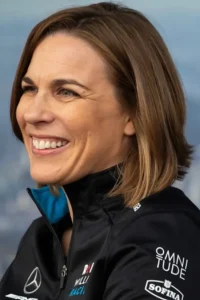
Claire Williams: change at the top of F1
Claire Williams OBE led Williams Racing through a pivotal era in Formula One, becoming one of only two women in the modern era to head an F1 team. Named Deputy Team Principal in 2013, she saw the team finish third in the Constructors’ World Championship in 2014 and 2015.
She also oversaw the sale of Williams F1 in 2020, so her talks cover a team’s strongest seasons and an ownership change. Since then she has advised global brands entering Formula 1 and serves as a Brand Ambassador for green technologies company Fortescue Zero. Keynotes, fireside chats, workshops and virtual programs are all options.
Best for: Executive offsites and leadership conferences facing a restructuring or a change of ownership, and audiences that follow motorsport. Claire Williams’s speaking fee: $65K–$70K in person; $20K–$25K virtual. Travels from: United Kingdom. View Claire Williams’s profile and check availability.
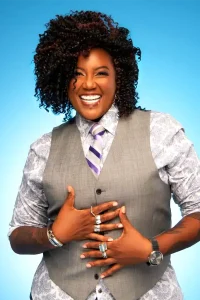
Cassandra Worthy: turning change anxiety into energy
Change makes people anxious, and Cassandra Worthy treats that feeling as fuel. A former chemical engineer and innovation delivery leader at Procter & Gamble and Duracell, she brings more than 10 years of M&A experience. Her clients include Fortune 500 companies such as Allstate and Bank of America.
Her keynote “Master the Chemistry of Change” has audiences assess their own change emotions and redirect fear into opportunity. “C.H.A.N.G.E. Traits” distills her M&A work into the skills leaders need during change, and her book is Change Enthusiasm.
Best for: Companies in the middle of a merger or reorganization, and all-employee meetings where morale is the main risk. She also speaks on building a resilient, inclusive culture. Cassandra Worthy’s speaking fee: $42.5K–$52.5K in person; $30K–$35K virtual. Travels from: Atlanta, GA. View Cassandra Worthy’s profile and check availability.
Researchers who explain how people adapt
These four study behavior, systems and teams. Choose one when your audience needs to understand why change stalls and what helps it move.
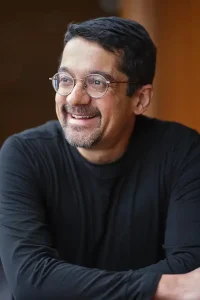
Shankar Vedantam: the hidden side of human behavior
Shankar Vedantam created and hosts Hidden Brain, which he and NPR launched as a podcast in 2015. He has reported on human behavior and social science for more than 25 years. That includes a decade as a national correspondent at The Washington Post and a later run as NPR’s social science correspondent.
In “The Hidden Brain” he draws on social science research about how people think and behave, a useful lens for any leader asking why people resist change. He co-wrote Useful Delusions with Bill Mesler, and his work has earned an Edward R. Murrow Award.
Best for: Large conferences and leadership meetings that want research told as stories. Of the 12 here, he carries the top fee. Shankar Vedantam’s speaking fee: $75K–$85K in person. Travels from: Washington, DC. View Shankar Vedantam’s profile and check availability.

Yossi Sheffi: automation, supply chains and work
At MIT, Yossi Sheffi holds the Elisha Gray II Professorship of Engineering Systems and directs the Center for Transportation & Logistics. Nine award-winning books carry his name, and he has founded or helped found five companies in technology and logistics. The Council of Supply Chain Management Professionals has given him its highest award.
“AI and the Future of Work: The Capabilities of Automation” draws on his book The Magic Conveyor Belt. It looks at how past technology shifts affected jobs and what workplaces may look like next. He also speaks on supply chain resilience, sustainable supply chains and logistics clusters.
Best for: Operations, logistics and manufacturing audiences, and leadership teams planning for automation. Yossi Sheffi’s speaking fee: $45K–$65K in person; $20K–$25K virtual. Travels from: Boston, MA. View Yossi Sheffi’s profile and check availability.

David Burkus: how teams rebuild trust
David Burkus taught at a business school, holds a doctorate in strategic leadership and has advised PepsiCo, Microsoft, Google, Adobe and NASA. Under New Management, Friend of a Friend and Best Team Ever are among his award-winning books. His ideas have run in the Wall Street Journal, Harvard Business Review and The New York Times.
Change tests trust first, and “The Trust Loop” presents a feedback cycle for building and repairing it, built on his line that trust is reciprocated. “Click” covers why some teams collaborate quickly through clarity and empathy while others collapse.
Best for: Team leaders and managers who must keep groups working together through a reorganization, especially when trust has slipped. A good fit for mid-range budgets. David Burkus’s speaking fee: $30K–$35K in person. Travels from: Tulsa, OK. View David Burkus’s profile and check availability.

Diana Kander: curiosity as a habit for change
Diana Kander came to the United States as a refugee at the age of eight. She became a New York Times bestselling author, innovation consultant and serial entrepreneur who has helped create multibillion-dollar products and advised boards. Her first book, All In Startup, has been taught in more than 100 universities.
Her book The Curiosity Muscle explains how successful companies grow complacent and why curiosity has to be practiced on purpose. Her curiosity keynote helps teams see themselves as innovators, and “Innovate to Sell” gives sales teams tools to focus on what matters.
Best for: Organizations that have grown comfortable and need people to question how they work. It also works for sales meetings. Diana Kander’s speaking fee: $35K–$40K in person. Travels from: Kansas City, MO. View Diana Kander’s profile and check availability.
Performing under pressure while everything shifts
Pilots, a Navy SEAL commander and a Formula One engineer make up this group. Their lessons suit teams that must keep delivering while the change is underway.
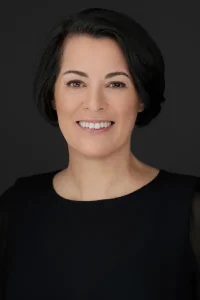
Nicole Malachowski: using headwinds as momentum
Retired Air Force Col. Nicole Malachowski was the first woman to fly as a Thunderbird pilot and logged more than 188 combat hours. She served as a White House Fellow, advising Michelle Obama and Dr. Jill Biden directly on Joining Forces, and the National Women’s Hall of Fame has inducted her.
In “Harnessing Headwinds: Successfully Navigating Change & Adversity,” leaders learn to turn shifts and setbacks into momentum. She also describes a tick-borne illness that, for nearly nine months, made it hard for her to walk or talk, and she offers a moderated fireside chat.
Best for: Leadership conferences and team meetings after a hard year or a major reset. Her fireside chat suits smaller executive groups. Nicole Malachowski’s speaking fee: $40K–$45K in person. Travels from: CO. View Nicole Malachowski’s profile and check availability.

Carey Lohrenz: clear decisions under heavy load
The first female F-14 Tomcat fighter pilot in the U.S. Navy, Carey Lohrenz has also worked as a corporate executive. She wrote two Wall Street Journal and USA Today bestsellers, Fearless Leadership and Span of Control.
Span of Control deals with what to do when you are under pressure and overwhelmed, a common state during change. Her keynote “Lessons In Leadership” brings cockpit fundamentals for winning under pressure into business, and “Lessons In Partnership” focuses on collaboration in difficult economic conditions. “Striking a Balance” uses a pre-flight systems check to help people balance work, family and personal goals.
Best for: Teams stretched thin by a rollout or reorganization, and sales or operations meetings. Carey Lohrenz’s speaking fee: $45K–$50K in person; $30K–$35K virtual. Travels from: Minneapolis, MN. View Carey Lohrenz’s profile and check availability.
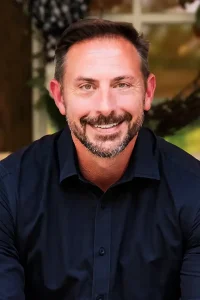
Rich Diviney: staying effective through uncertainty
Uncertainty is the part of change people find hardest, and Rich Diviney trained for it for two decades as a Navy SEAL commander. He founded the SEALs’ “Mind Gym” and wrote Masters of Uncertainty, on turning stress into success for you and your team.
In “Masters of Uncertainty: Thriving in Chaos” he gives audiences a framework for breaking large challenges into smaller pieces, along with practical calming techniques. Since retiring from active duty in 2017, he has worked with clients such as Google, McKinsey and American Airlines.
Best for: Teams facing a long stretch of ambiguity, such as a restructuring or a market shift, and leaders who need to steady others. Rich Diviney’s speaking fee: $35K–$40K in person. Travels from: Virginia Beach, VA. View Rich Diviney’s profile and check availability.
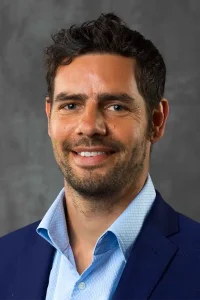
Marc Priestley: keeping pace with new technology
Marc Priestley spent a decade as a senior figure in engineering and leadership with McLaren, one of Formula One’s most successful teams. He won World Championships there with drivers like Lewis Hamilton and is now a coach, business consultant and the author of Pitlane Lessons and The Mechanic.
His keynote “High Performance Under Intense Pressure” suits teams that must stay sharp during upheaval. “Driving the Future” looks at how electric vehicle technology and sustainability are changing motorsport, and a third talk covers using big data to put a strategy into practice.
Best for: Engineering, automotive and technology audiences, and any team adopting new tools, data or processes at speed. A pit lane teamwork workshop is also available. Marc Priestley’s speaking fee: $40K–$60K in person. Travels from: United Kingdom. View Marc Priestley’s profile and check availability.

John Foley: a mindset for embracing change
John Foley was a Marine instructor pilot and then lead solo pilot of the Blue Angels, and in 2011 he founded the Glad To Be Here Foundation. He studied at the Stanford Graduate School of Business and the Naval War College and has worked with Microsoft, Cisco, IBM and Coca-Cola.
“Embracing Change with Innovation” shows how adaptability and a unified response to the unexpected can drive innovation and a competitive edge. His signature “Glad To Be Here” mindset treats gratitude as a form of ownership, even in adversity, and his book Fearless Success came out in 2026.
Best for: Company-wide meetings and leadership events that want energy and a shared mindset for the change ahead, including teams starting innovation projects. John Foley’s speaking fee: $63K–$73K in person. View John Foley’s profile and check availability.
Treat these 12 as a shortlist rather than the full field. Our page of change management speakers shows every name we represent, each with a fee range and a home city.
Budget bands for change management speakers
Change management speakers on our roster start near $10,000, and the highest fees reach $300,000, with half starting at $30,000 or less.
- $25,000 to $39,999: the band where most change speakers start; David Burkus, Mike Abrashoff and Rich Diviney are in it.
- $40,000 to $59,999: Nicole Malachowski, Cassandra Worthy and Carey Lohrenz sit in this middle tier.
- $60,000 to $99,999: Claire Williams, John Foley and Shankar Vedantam start in this range.
Your quote will move with the date, the city, the format and any custom work requested. Travel costs for in-person appearances are typically separate.
Fees from the Mollie Plotkin Group speaker database as of October 21, 2026.
Which speaker fits which kind of change
- Merger or acquisition: Cassandra Worthy built her framework on years of M&A work at Procter & Gamble and Duracell.
- New technology or automation: Yossi Sheffi explains what automation has meant for jobs, and Marc Priestley brings an engineer’s view of new technology.
- Reorganization or new leadership: Mike Abrashoff and Claire Williams have both run an organization through a period of major change.
- Change fatigue after a hard year: Nicole Malachowski and Carey Lohrenz speak to performing when people feel stretched or knocked back.
- Culture of complacency: Diana Kander’s curiosity work suits teams that have stopped questioning how things are done.
- Manager or team-lead training: David Burkus gives managers tools for trust and collaboration inside their own teams.
- Long stretch of uncertainty: Rich Diviney teaches techniques for staying calm and effective when the outcome is unclear.
- Large conference or company-wide meeting: Shankar Vedantam and John Foley both work well in big rooms with mixed audiences.
What put these 12 on the list
We began with our change management roster and kept those whose profiles show change they led, studied or trained people for, and who list a current in-person fee. We grouped them by angle rather than ranking them, because the right choice depends on the kind of change your people face.
Change management speaker questions from planners
What do change management speakers charge?
A change management keynote typically costs $25,000 to $40,000 in person, though the full range stretches from about $10,000 to $300,000. The date, location, format and amount of tailoring all shape the final number, and travel is normally added for in-person events. Ask your agent which names fit your budget before you build a shortlist.
What does a change management keynote usually cover?
Most cover why change feels hard, what helps people move through it and what leaders can do next. Some speakers lead with research on behavior, some with stories of change they led, and others with tools for staying effective under pressure. Tell your agent what kind of change your audience faces, and they can point you to speakers who address it directly.
When in a change program should the keynote happen?
Soon after the announcement is a strong moment, because questions are fresh and people are deciding how to respond. A midpoint also works, when early energy fades and people need a reset. Either way, brief the speaker on where you are. Reserve your speaker once the date is fixed, since in-demand names fill their calendars months ahead.
Can the speaker address our specific change?
Usually, yes. When you check availability, describe what is changing, who is affected and where people are stuck. Many speakers adjust their examples and close with steps that fit your situation. Ask whether a planning call is included. Mike Abrashoff, for example, offers half-day and full-day programs, which give managers time to apply the ideas to their own teams.
Can a change management keynote work virtually?
Yes. Many of these speakers present online, and a virtual session can reach distributed teams going through the same change in different places. Inquire about the virtual fee when you check availability. On screen, a fireside chat with room for questions suits the format well, and it lets people raise worries they might hold back in a crowded hall.
Next steps for booking your change speaker
Change keynotes earn their fee when people walk out with a first step they can take on Monday. Settle on the angle your people need most, weigh it against what you can spend and keep a short list of a few names.
Your MPG agent can then confirm open dates, the fee and travel. To start, open each speaker’s profile, click Check Availability and share your date, city and a short note on the change ahead. Change rarely arrives on its own, so if your agenda also touches culture, leadership or disruption, our leadership speakers, corporate culture speakers, disruption speakers and innovation speakers are worth a look.