What Is a Fireside Chat? A Guide for Corporate Events
On this page
A fireside chat is a conversational event format that helps corporate audiences hear from a guest speaker in a more personal and direct setting. The Mollie Plotkin Group has facilitated fireside chat events featuring guest speakers from Saquon Barkley to Seth Godin.
This guide explains what a fireside chat is, how it works, who should moderate it, and when it makes sense for a corporate event. Use it to decide whether a fireside chat belongs in your next conference, leadership meeting, awards program, fundraiser, or employee engagement event.
Table of Contents
- What Is a Fireside Chat?
- Why Corporate Events Use Fireside Chats
- How to Plan a Fireside Chat
- Who Should Introduce a Fireside Chat?
- Who Should Moderate a Fireside Chat?
- Who Should Be the Guest Speaker?
- What Events Work Best for Fireside Chats?
- Fireside Chat FAQ
What Is a Fireside Chat?
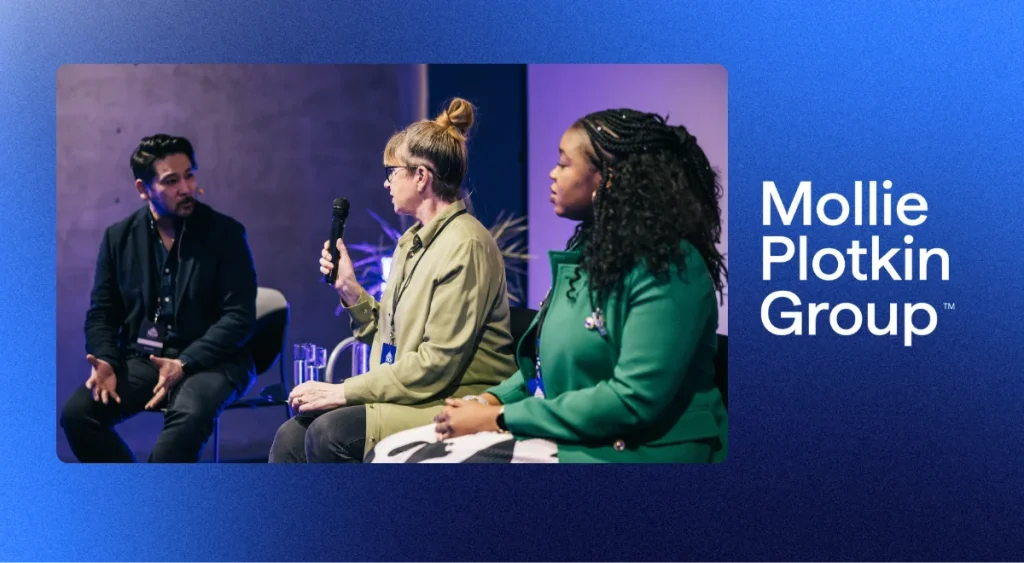
A fireside chat is a moderated conversation with a guest speaker, usually presented as a seated interview rather than a formal keynote.
Best for: corporate conferences, leadership summits, employee engagement events, and executive retreats.
A fireside chat usually features a host who asks prepared questions to a speaker in front of a live audience.
The format feels informal, but the strongest fireside chats are carefully planned before the event.
The moderator guides the conversation toward the speaker’s experience, the audience’s priorities, and the larger theme of the program.
History of the Fireside Chat
The original fireside chats were radio addresses delivered by President Franklin D. Roosevelt between 1933 and 1944. The phrase became associated with a familiar, conversational style of public communication. Modern corporate fireside chats borrow that same sense of directness, but they usually use a live interview format with a moderator and guest speaker, unlike the original fireside chats which were delivered solo.
Purpose & Use Cases of a Fireside Chat at Corporate Events
Corporate events use fireside chats because the format creates a personal conversation around leadership, culture, performance, innovation, or change.
Best for: sales meetings, client events, internal leadership programs, and association conferences.

Event planners often use fireside chats when they want a recognizable name without requiring a full keynote structure. Athletes, authors, entrepreneurs, entertainers, executives, and cultural figures can all work well in this format.
How to Plan a Fireside Chat
A successful fireside chat depends on a clear structure, a prepared moderator, and questions that invite specific answers.
The best fireside chat outlines usually include an introduction, a strong opener, audience-relevant questions, personal or opinion-based questions, and a clear closing moment. The outline should be organized by themes rather than written as one long list of questions. Each theme should include several prepared questions so the moderator can adapt during the conversation.
A simple structure can look like this:
| Section | Content |
| Introduction | Explain who the speaker is and why the conversation matters to the audience. |
| Opener | Give the speaker an easy way into a personal or timely story. |
| Background | Connect the speaker’s experience to the audience’s industry, goals, or event theme. |
| Opinions | Ask the speaker for specific advice, judgment, or perspective. This information is exclusive to the speaker. |
| Closer | Give the audience one memorable takeaway. |
Who Should Introduce a Fireside Chat?
The event emcee should usually introduce a fireside chat because the emcee controls the transition into the session.
The introduction should be brief, well under 100 words, and connected to the reason the speaker is on the program.
The emcee should introduce the moderator first when the moderator is separate from the emcee. The moderator can then welcome the guest speaker and begin the conversation.
This transition helps the event feel organized. It also prevents the conversation from beginning abruptly. A smooth introduction is especially important when a fireside chat follows a meal, reception, award presentation, or entertainment segment.
Who Should Moderate a Fireside Chat?
The moderator of a fireside chat should be a professional interviewer, such as a journalist, news anchor, or otherwise a host of a program.
A strong moderator does not need to be the most senior person in the room. The moderator needs to understand the audience, the event goal, and the speaker’s background.
Who Should Be the Guest Speaker?
The guest speaker for a fireside chat should be someone with credible stories, direct experience, and a perspective the audience cannot easily get elsewhere.
Fireside chats work especially well for speakers whose value comes from their lived experience, such as a professional athlete or best-selling author.
When Should a Fireside Chat Take Place During an Event?
The format often works well during or after a happy hour, dinner, reception, or awards program. The conversational tone can help the event feel more relaxed while still giving the audience a meaningful speaker experience.
Fireside chats also work well at book signings, fundraising events, donor programs, and general celebrity appearances. These events often benefit from a format that makes the guest feel accessible. The audience can hear stories, context, and advice without sitting through a formal lecture.
Sample Fireside Chat Questions for Corporate Events
Fireside chat questions should help the speaker give specific, useful, and audience-relevant answers.
The strongest questions usually ask the speaker to explain a decision, describe a turning point, or offer a practical lesson. The moderator should avoid questions that can be answered with one word. The moderator should also avoid questions that force the speaker into generic advice.
The sample questions below are incredibly general and should not be used verbatim.
All questions that are actually used during a fireside chat should reference specific points in the guest speaker’s life / career.
Remember, this is not a true interview, so questions are not hard hitting, unexpected, or disproportionally thought-provoking.
- What moment in your career changed the way you think about leadership?
- What lesson from your work applies most directly to this audience?
- What decision looked risky at the time but proved important later?
- What do people misunderstand about success in your field?
- What advice would you give to a team navigating pressure or change?
- What should this audience remember after today’s conversation?
Fireside Chat FAQ
How much does a fireside chat speaker cost?
A fireside chat speaker fee depends on the speaker, event format, event date, travel requirements, and audience size. Celebrity athletes, bestselling authors, entrepreneurs, entertainers, and major public figures can vary widely in cost. The Mollie Plotkin Group can provide current pricing once the event details and preferred speaker options are known.
How far in advance should I book a fireside chat?
Most organizations should begin booking a fireside chat speaker several months before the event. High-profile speakers often require more lead time because of travel, media, team, publishing, or professional commitments. Earlier outreach gives the planner more speaker options and more time to prepare the moderator’s questions.
What is the difference between a fireside chat and a keynote?
A keynote is usually a prepared speech delivered directly to the audience. A fireside chat is usually a moderated interview with prepared questions and a conversational tone. A keynote works well when the event needs a clear message, while a fireside chat works well when the event needs personal stories and direct discussion.
Can a fireside chat include audience questions?
A fireside chat can include audience questions when the event schedule and speaker format allow it. Audience questions work best near the end of the conversation after the moderator has covered the most important themes. The planner should decide in advance whether questions will be submitted live, collected beforehand, or screened by the event team.
Are fireside chats available for virtual events?
Many fireside chat speakers are available for virtual events. A virtual fireside chat usually works best when the moderator, speaker, and event producer rehearse the timing, camera setup, and question flow before the session. The format can work well for remote employee meetings, client programs, webinars, and leadership conversations.