
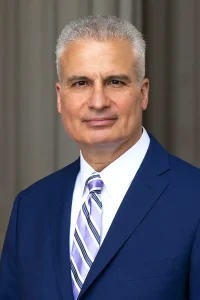
John Sitilides
John Sitilitdes is a Washington D.C. geopolitical risk and international relations specialist. His keynotes simplify global geo-economic decisions for executives across finance, insurance, trade associations, and any industry seeking to better prepare for disruption.
John Sitilides Booking & Availability
Speaking fees, availability and booking details for corporate events, keynotes and private appearances.
How do I book John Sitilides for a corporate event?
Use the Check Availability form above to send your proposed event date, location, audience size, event format and program goals. The Mollie Plotkin Group will follow up with availability and next steps.
What is John Sitilides’s speaking fee?
John Sitilides’s current speaking fee is $30,000–$35,000. Final pricing can vary by date, location, event format and scope of the appearance.
Is John Sitilides available for my event date?
Submit your proposed date and event details and the Mollie Plotkin Group will confirm current availability.
Who is John Sitilides’s booking agent?
Contact the Mollie Plotkin Group to inquire about booking John Sitilides.
What types of events can John Sitilides be booked for?
Corporate events, conferences, leadership meetings, keynote speeches, workshops, fireside chats, private events and virtual programs may be available depending on the engagement.
John Sitilides Keynote Topics & Programs
John Sitilides speaks on business, disruption, global affairs and politics & culture through keynote presentations and related programs.
Trump and the World: The New Geopolitics of Great Power Competition
“The next few months, if not years, will be a time of reassuring corporate executives, investment managers, and business leaders worldwide that Washington will manage the geopolitical and geo-economic disruptions we anticipate throughout the international security landscape, and achieve American economic and financial objectives across global markets.” – John Sitilides
Geopolitical strategist John Sitilides, a Senior Fellow for National Security at the Foreign Policy Research Institute and a State Department Diplomacy Consultant during President-elect Donald Trump’s first presidential term (2017-2021) probes the incoming Trump Administration’s foreign policy, national security, international trade, and global affairs priorities and strategies for the next four years, and assesses the complex geopolitical and geo-economic decisions that impact markets in Asia, Europe, the Middle East, and worldwide, helping corporate executives, investment managers and civic audiences better understand, anticipate, and mitigate risk.
The global economy, long based upon a rules-based trade system, is undergoing profound and fundamentally transformative shifts from uneven recoveries to new hot wars and potential cold wars, as well as challenging energy security debates.
China seeks to dominate Asia, manage its commercial relations, and challenge U.S. global leadership. Meanwhile Washington pursues closer ties with India, Japan, and Indo-Pacific powers for regional counterbalance. Iranian-sponsored terror against Israel and global shipping in the Red Sea is destabilizing the Middle East and its global oil and gas supply network. Russia’s war against Ukraine is upending Europe’s security architecture and global energy & food supply chains. As the EU scrambles to escape hydrocarbon dependence on Moscow, NATO seeks to prevent alliance fracturing, and Germany and the United Kingdom plan for energy rationing, deindustrialization, food shortages, energy scarcity, cybersecurity, and policies that increasingly impact C-suite decision-making.
Amid the most complex international security landscape since the end of the Cold War, geopolitical strategist John Sitilides delivers valuable insights and thoughtful understanding of geopolitical trends in both the short-term and future. Using open-source intelligence, he explores the key geopolitical risks across the international trade, security, technology, and diplomacy landscapes that will dominate global and regional investment strategies and provide both serious challenges and long-term opportunities.
John’s work in DC gives him direct access to congressional hearings, white house staff, the Defense and State Departments, scores of think tanks, and many other exceedingly useful sources. This allows him to cut through the noise you hear on TV news and offer original, refreshing, and sometimes contrarian perspectives that go beyond the surface. This keynote dives deeper than what you can read in news headlines to understand why D.C. and foreign leaders make the decisions they make. John’s open-source intelligence will drive home the motives, incentives and constraints of the global environment to make your organization better prepared for disruption.
Key Takeaways from What Is Open-Source Intelligence?
Forecasting is a difficult and fallible game. John will give you a glance into our global future, but it isn’t the purpose of his keynote. This keynote is built to help corporate and investment leaders better understand, anticipate, and mitigate geopolitical risk in today’s disrupted economic and financial landscape. So even when something unpredictable happens, your organization will react faster and better than the competition.
Please Note from What Is Open-Source Intelligence?
We always recommend John’s presentation as the opening keynote. Almost every subsequent speaker or panelist at the event will reference his geopolitical and geoeconomic content in their own later remarks. When John is occasionally slotted as the closing speaker, many audience members lament that his presentation did not open the event.
John Sitilides Biography & Credentials
John Sitilides is a geopolitical risk and international relations specialist also well-known for his keynote and motivational speaking. He serves as Senior Fellow for National Security at the Foreign Policy Research Institute, and leads investment managers and corporate executives through an increasingly uncertain trade and security landscape. His speeches help industry leaders to better understand, anticipate, and mitigate risk in the face of disruption and geopolitical turmoil. John Sitilides is available to be booked for corporate and private events. Contact the Mollie Plotkin Group today to inquire about John Sitilides’s fees.
Want to book John Sitilides for an event?
Contact the Mollie Plotkin Group at (215) 995-0905 to book John Sitilides for corporate or private events, keynote speeches, workshops, fireside chats, motivational speaking, or virtual appearances. Our agency will work directly with your organization and our keynote speakers to create an unforgettable event.
The Mollie Plotkin Group is the leading keynote speakers agency and entertainment bureau bringing excitement to audiences, clients, and employees. We represent subject-matter experts in every possible field, so whether we’re your partner in creating a memorable meeting, or your meeting planner’s secret weapon in securing the perfect keynote speaker, we’re in this with you.
Geopolitical Experience
In 1998, John Sitilides launched the Western Policy Center, a Washington, D.C. international relations organization researching and forecasting U.S., NATO & EU political, commercial, and security issues in southeastern Europe and the Middle East. After seven years as executive director, overseeing strategic planning, policy analysis, political & corporate communications, and financial management, he negotiated a 2004 merger with the Woodrow Wilson International Center for Scholars to establish the Southeast Europe Project.
He then served as Board Chairman for the Southeast Europe Project from 2005 to 2011, continuing his research and forecasting. In 2005, he also launched Trilogy Advisors LLC where he manages a government affairs portfolio specializing in U.S. government relations, geopolitical risk, and international affairs.
From 2006-2023, under Presidents George W. Bush, Barack Obama, Donald Trump, and Joseph Biden, Sitilides served as Diplomacy Consultant, Southern Europe Regional Coordinator, and Chair of the Southeast Europe Advanced Area Studies Program at the State Department’s professional development and diplomacy academy for American foreign policy professionals. Additionally, John served as an Alternate Member of the Commerce Department’s U.S.-Greece Initiative for Technology Cooperation in the Balkans, under President George W. Bush.
Media
John is a respected national security commentator for U.S. and international media. In fact, he is often featured on media outlets like Bloomberg News, CNN, FOX News, CNN International, Newsmax, and NewsNation. Moreover, he has been interviewed or cited in the Wall Street Journal, New York Times, Washington Post, Washington Times, BBC News, Politico, Euromoney, Asia Times, Institutional Investor, South China Morning Post, and other leading print and digital media. He has also given a TEDx Talk in 2017 on American Identity on the Global Stage.
Hire John Sitilides
John Sitilides makes the profound challenges in today’s security and diplomacy landscapes easy to understand. He brings nearly four decades of political, business, and foreign policy experience to inform audiences about global risk trends, international threat assessments, and geopolitical strategies. He regularly speaks in front of C-suite executives, high-stakes decision-makers, and opinion leaders at corporate & investor conferences, industry summits, and before government, military, and intelligence community audiences.
In his customized keynotes, he explores the complex geopolitical decisions that impact the future of your organization. If you would like to tailor John Sitilides’ keynote, set up a Zoom call with John and the MPG team.