
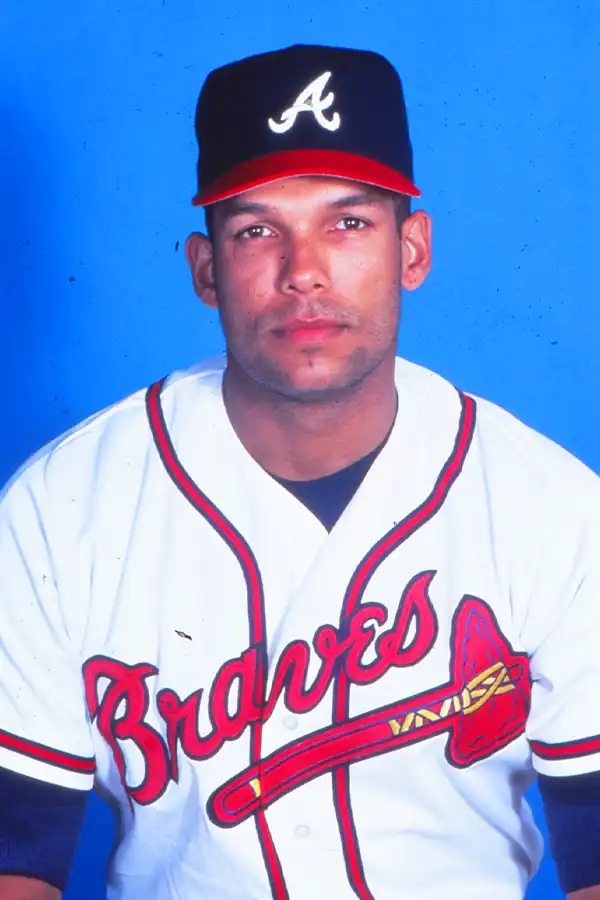
David Justice
Two-Time World Series Champion, MLB Legend, Moneyball
David Justice is a two-time World Series champion, MLB star, and one of baseball’s most clutch postseason performers.
Meet David Justice
David Justice is one of the most clutch and accomplished postseason performers in Major League Baseball history. A two-time World Series champion and three-time All-Star, Justice played 14 seasons in the majors, earning a reputation as a power-hitting outfielder with a knack for delivering in the biggest moments.
From winning National League Rookie of the Year with the Atlanta Braves to crushing the decisive home run in Game 6 of the 1995 World Series, Justice’s career was defined by his ability to rise to the occasion. With 305 career home runs, over 1,500 hits, and a remarkable 11 straight postseason appearances, he left an indelible mark on the game.
Today, Justice shares his journey from an overlooked multi-sport athlete to a baseball legend. His talks offer insights on leadership, perseverance, and what it takes to perform under pressure—both in sports and life. David Justice is available to be booked for corporate and private events. Contact the Mollie Plotkin Group today to inquire about his fees.
Want to book David Justice for an event?
Contact the Mollie Plotkin Group at 215-995-0905 to book David Justice for a keynote speech, corporate event, leadership program, workshop, fireside chat, virtual appearance, or other private or professional event.
Our team will help confirm David Justice’s availability, speaking fee, travel requirements, and fit for your audience. To start the booking process, please share your event date, location, audience size, event format, and the type of presentation you are looking for.
The Mollie Plotkin Group is a full-service keynote speaker agency and entertainment bureau that helps organizations secure keynote speakers, entertainers, athletes, celebrities, and thought leaders for corporate meetings, conferences, fundraisers, and special events.
Biography
From Multi-Sport Standout to MLB Superstar
David Justice’s journey to baseball stardom was anything but conventional. A gifted student, he skipped two grades and graduated at just 16 years old, all while establishing himself as a dominant basketball player at Covington Latin High School. David still holds the school’s all-time scoring record and averaged nearly 26 points per game as a senior.
While baseball was not part of his high school’s sports program, David honed his skills on the diamond by playing American Legion baseball during the summers. However, his first love remained basketball, and he accepted a scholarship to Thomas More College in Kentucky, where he played as a point guard. David made the switch to baseball, in part, because he hated the basketball team’s three mile runs after practice. Then, scouts from the MLB saw his raw athletic potential and his future in baseball became clear. Ultimately, the Braves selected him in the fourth round of the 1985 MLB Draft, betting on his untapped power and natural athleticism.
Rising Through the Minors & Rookie Stardom
David quickly made an impression in the Braves’ minor league system, showcasing his ability to hit for power while maintaining a patient approach at the plate. In 1989, after steadily climbing the ranks, he made his MLB debut with the Braves. The following season, an opportunity opened up when the team traded longtime fan favorite Dale Murphy, clearing the way for David to take over as the Braves’ full-time right fielder. He did not disappoint.
In 1990, David broke out in a big way, crushing 28 home runs and driving in 78 runs over 127 games. His ability to hit for power, combined with his keen eye at the plate, made him one of the most dangerous young hitters in the game. His stellar performance earned him the National League Rookie of the Year Award, setting the stage for a career filled with clutch moments and championship success.
Becoming the Face of a Braves Dynasty
As the Braves transformed from a last-place team into a perennial contender, David was at the center of it all. From 1991 to 1996, he was one of the most consistent offensive threats in the Braves’ lineup, leading the team to multiple postseason appearances.
David’s first taste of postseason glory came in 1991 when he helped lead the Braves to a dramatic worst-to-first turnaround. Atlanta reached the World Series against the Minnesota Twins in what became one of the most thrilling Fall Classics of all time. Though the Braves fell short in seven games, David provided key hits throughout the series.
In 1995, David solidified his legacy in Braves history. With Atlanta leading the World Series three games to two against the Cleveland Indians, David stepped up in Game 6 and delivered the most significant home run of his career—a solo shot in the sixth inning that proved to be the game-winner. His clutch homer gave the Braves a 1-0 victory, clinching the franchise’s first World Series title since moving to Atlanta. That home run remains one of the most iconic moments in Braves’ history.
A New Chapter: Cleveland & New York
After the 1996 season, David was traded to the Cleveland Indians in a blockbuster deal that sent Kenny Lofton to Atlanta. Rather than slow down, he flourished in Cleveland, posting one of the best seasons of his career. In 1997, he hit .329 with 33 home runs, 101 RBIs, and a .596 slugging percentage, earning his third All-Star selection and second Silver Slugger Award. David helped lead the Indians to the World Series, marking his third World Series appearance in six years.
In 2000, the New York Yankees, looking to bolster their lineup for another championship run, acquired David in a midseason trade. The move paid off immediately. David caught fire after joining the Yankees, smashing 20 home runs in just 78 games and playing a crucial role in the team’s playoff success. In the ALCS against the Seattle Mariners, David launched a go-ahead three-run homer in Game 6, sending the Yankees to the World Series and earning ALCS MVP honors. He would go on to win his second World Series ring as the Yankees defeated the New York Mets in the “Subway Series.”
Final Season & Retirement
After a brief stint with the Oakland Athletics in 2002, where he helped mentor a young team featured in the book and film Moneyball, David retired from baseball. He left the game with an impressive résumé: a .279 career batting average, 305 home runs, 1,017 RBIs, and a reputation as one of the most clutch postseason performers of his generation. His career postseason numbers—63 RBIs, 89 hits, and multiple game-changing moments—cement his status as one of baseball’s greatest October heroes.
Post-Playing Career & Broadcasting
Following his retirement, David transitioned into broadcasting, working as an analyst for ESPN and later the YES Network, where he provided insightful commentary on the game he excelled in for so many years. His ability to break down the nuances of hitting, game strategy, and clubhouse dynamics made him a respected voice in the media.
Beyond broadcasting, David has been involved in various charitable endeavors, supporting youth baseball programs and community initiatives. He has also been an advocate for player development, sharing his knowledge and experiences with the next generation of athletes.
Hire David Justice
Today, David is a sought-after speaker, bringing his wealth of experience in high-pressure environments to audiences across the country. Whether it’s a fireside chat, leadership discussion, or motivational address, David delivers impactful messages that resonate with audiences of all kinds.
How to Hire David Justice
To hire David Justice for an event, contact the Mollie Plotkin Group with the proposed event date, location, audience size, event format and program goals. David Justice is available for corporate events, conferences, leadership meetings, private events, workshops, fireside chats and virtual programs.
After receiving your request, a Mollie Plotkin Group booking agent will review David Justice’s availability, discuss the event details and get back to you within 48 hours with next steps for securing David Justice for your program.
David Justice Booking Fee
The cost to book David Justice depends on the event date, location, format, audience size and scope of the appearance. David Justice’s speaking fee starts at $22,500. Speaking fees may vary for keynote speeches, workshops, fireside chats, private events, corporate meetings and virtual programs.
For the most accurate David Justice booking fee, contact the Mollie Plotkin Group with your event details. Our team will help confirm availability, pricing and the best format for your event.