Decoding the World: The Boardroom in a World That’s Already Changed
On this page
Guest post by Adam Pacifico
When was the last time you sat in a boardroom or executive committee meeting and felt the mood shift from confidence to caution?
That is the feeling I took away from my recent conversation with Ozan Ozkural on The Leadership Enigma. What stood out most was not a single headline risk. It was something deeper: a growing sense among senior leaders that the old playbook no longer works.
Ozan described a moment from Davos that stayed with him. This was his eighth Davos in ten years. The setting was familiar: the same mountains, the same badges, the same “future of everything” panels. But this year felt different. Instead of optimism and dealmaking, he sensed something closer to collective helplessness.
Not fear of one event. Fear that the assumptions leaders relied on for decades are no longer reliable.
If even the people with the most access, influence, and information feel unmoored, boards need to ask a harder question:
What should leadership teams be doing now?
Who is Ozan Ozkural, and why do boards listen?
Ozan Ozkural brings an unusually broad perspective to board-level strategy.
Born in Istanbul and raised in London, he began his career at Merrill Lynch, where he saw firsthand how incentives, markets, and human behavior interact under pressure. In 2014, he founded Tanto Capital Partners, a boutique investment bank investing across multiple asset classes, and over the past decade expanded into geopolitical and public policy advisory work.
What makes his perspective useful for boards is not just that he understands geopolitics. It is that he translates complexity into practical leadership questions:
- What does this mean for strategy?
- What does it mean for financing?
- What does it mean for supply chains?
- What does it mean for customers?
- What does it mean for risk?
That translation is what separates being informed from being prepared.
The old world order is not wobbling. It has already changed.
One of Ozan’s clearest points is also one of the most unsettling:
Many leaders are still behaving as though we are entering a new era. In reality, we are already in it.
He sees today’s instability as the unwinding of the post-World War II liberal world order: the long period shaped by US security guarantees, Bretton Woods stability, European rebuilding, and relative geopolitical predictability.
That system did not collapse overnight. It eroded gradually, then began to accelerate.
Now businesses are operating in a more multipolar world, with Washington and Beijing acting as competing centers of gravity. Countries and companies alike are being pulled into sharper trade-offs.
Boards do not need to become foreign policy experts. But they do need to recognize one important shift:
Geopolitics is no longer background context. It is now a core input into business strategy.
The lesson from 2008 many boards still have not learned
Ozan’s leadership perspective is grounded in experience, not theory. During the global financial crisis, he watched institutions fail not only because they missed warning signs, but because they were not motivated to see them.
That should concern every leadership team.
Incentives can make smart people selectively blind.
From 2008, he draws three lessons that still apply to governance today:
- People tend to see what they want to see, especially when performance is strong.
- The gap between theoretical fear and real panic is enormous. Everyone has a plan until reality hits.
- “It’s different this time” is often a comforting myth. The pendulum between greed and fear does not disappear. It only swings.
Then came the policy response. Central banks injected liquidity to prevent systemic collapse. That intervention stabilized markets, but it also created a long period of abundant capital, suppressed yields, and pressure to take more risk in order to generate returns.
Those conditions shaped a generation of business assumptions:
- capital would stay cheap
- supply chains would remain frictionless
- scale would continue to solve most problems
Those assumptions no longer hold in the same way.
The pandemic changed both economics and politics
The pandemic recapitalized households on a historic scale. The inflation that followed changed both the political mood and the business environment.
The central political fear shifted from unemployment to inflation. At the same time, companies have had to adjust to a world where the cost of debt is higher and may remain higher for longer.
Ozan put it simply: whether you are a commodities trader in the Gulf or an avocado farmer in California, the cost of capital affects your ability to remain a going concern.
He also pointed to another force shaping the current climate: social media has magnified perceptions of inequality. Not just through statistics, but through constant exposure to curated lives and public comparison. That visibility, he argues, has fueled anger, hopelessness, and rising populism across both the left and the right.
For boards, this is not abstract sociology. It affects:
- consumer trust
- regulatory volatility
- employee sentiment
- operating stability
Why “muddling through” is no longer enough
A phrase kept returning throughout our conversation: muddling through.
That is how many large organizations respond to disruption. They rely on incrementalism and hope that gradual adjustment will be enough.
Ozan’s warning is clear: the pace of change has compressed. What once took 50 years may now take five.
His answer is the Stockdale Paradox:
- face the brutal facts as they are
- maintain faith that you will emerge stronger on the other side
That is not performative optimism. It is disciplined leadership.
Brutal reality plus grounded belief.
What boards should do now
Ozan did not offer a simplistic checklist, which is part of why his view is credible. But he did point to several practical priorities for boards and senior executives.
1. Treat governance as a foresight function
Governance should not be a ritual or a performance. It should help leadership teams see around corners. That means building productive discomfort into decision-making, challenging confirmation bias, and encouraging dissent early rather than after consensus has hardened.
2. Revisit incentives before they fail you
Incentives are often the hidden architecture of failure. If boards want executives to think in decades, they cannot reward them as though they are trading quarter to quarter.
3. Upgrade leadership with honesty
Leadership capability is now a survival issue. Boards need to look closely at who is in each role, who has the range to lead through uncertainty, and who is still operating with assumptions from a world that no longer exists.
4. Take the resource demands behind AI seriously
Artificial intelligence is not just a software story. AI requires power, infrastructure, and long-term energy planning. That brings issues such as energy security, grid capacity, nuclear power, small modular reactors, supply chain resilience, food security, and water access into the strategic conversation.
5. Prepare for quantum disruption
Ozan also raised a major longer-term risk: quantum computing. Once quantum capabilities advance far enough, current encryption systems could become vulnerable quickly. Because quantum-safe infrastructure will take time to deploy at scale, the gap between technological change and organizational readiness could create serious exposure.
The real leadership advantage is courage
The central takeaway from my conversation with Ozan Ozkural is this:
Leadership does not require perfect certainty. It requires the courage to act before certainty arrives.
You may only have 30 percent clarity. But if governance is stronger, incentives are better aligned, and the right people are in the right seats, that can be enough to move.
That, in Ozan’s view, is what separates stronger boards and executive teams from weaker ones.
Courage.
Five questions for your next board meeting
Take these questions into the room:
- What are we assuming that used to be true, but may no longer be true now?
- Where are incentives quietly rewarding the wrong behavior?
- What risk are we currently not incentivized to see?
- Which two or three resilience bets matter most to our long-term viability?
- Do we have the courage to change seats, not just slides?
That is the work of leadership today. Not calming the chaos, but leading through it.
About the Author
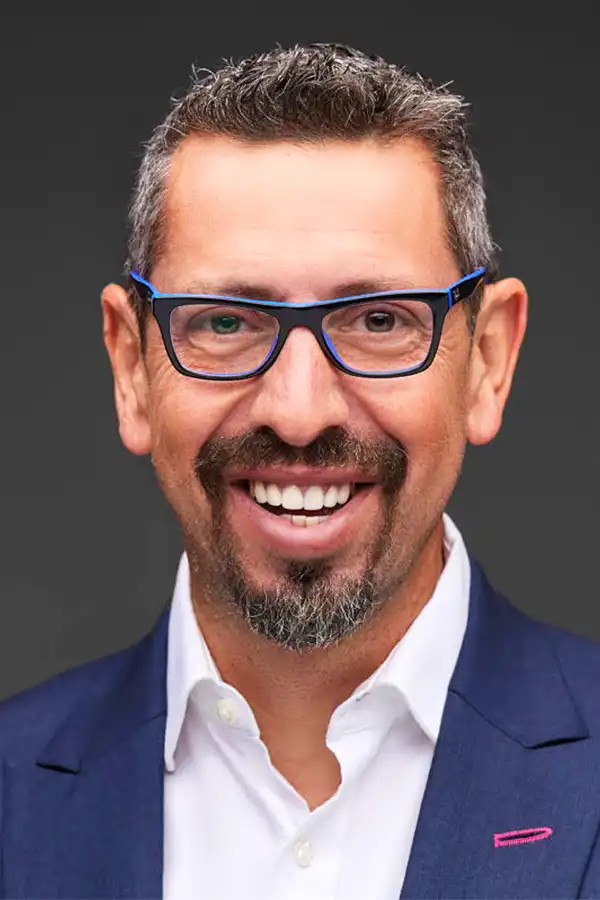
Adam Pacifico is the host of the globally ranked, award winning podcast The Leadership Enigma, author and Partner at Heidrick & Struggles.
Decoded: The Leadership Enigma weekly newsletter
Over 400 videos – The Leadership Enigma YouTube channel